Every year, US companies waste over 2,000 development hours per team managing cloud infrastructure manually time that could be spent building revenue-generating features. For CIOs and CTOs navigating digital transformation, selecting the appropriate cloud model isn’t just a technical decision; it’s a strategic imperative that directly impacts your bottom line, deployment velocity, and competitive positioning.
The challenge isn’t just choosing between IaaS, PaaS, or SaaS it’s understanding how each cloud computing model aligns with your business objectives while minimizing operational overhead. Many organizations find themselves trapped between needing the control of Infrastructure as a Service and craving the simplicity of Platform as a Service, all while their DevOps teams struggle with manual provisioning, configuration drift, and security compliance.
This comprehensive guide breaks down each cloud deployment model, examines the cloud reference model framework, and introduces a transformative approach that delivers IaaS power with PaaS simplicity. You’ll discover how QuickInfra reduces manual DevOps effort by 90% and accelerates deployment by 4x, enabling your teams to focus on innovation rather than infrastructure management.
Table of Contents
ToggleUnderstanding Cloud Service Models: The Foundation of Modern Infrastructure
What Defines Each Cloud Model?
Before diving into selection criteria, let’s establish clarity on what distinguishes each cloud model in today’s enterprise landscape.
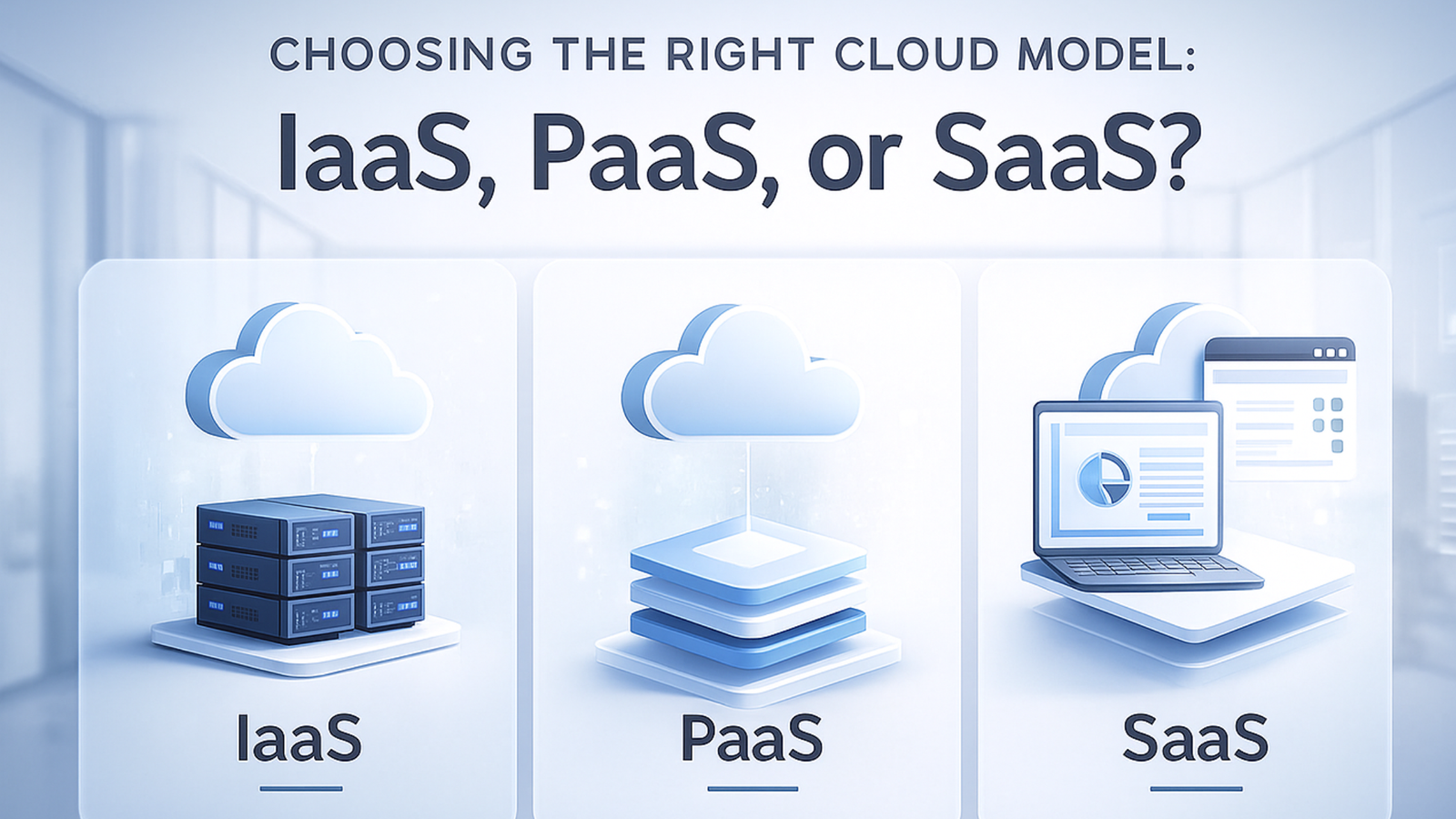
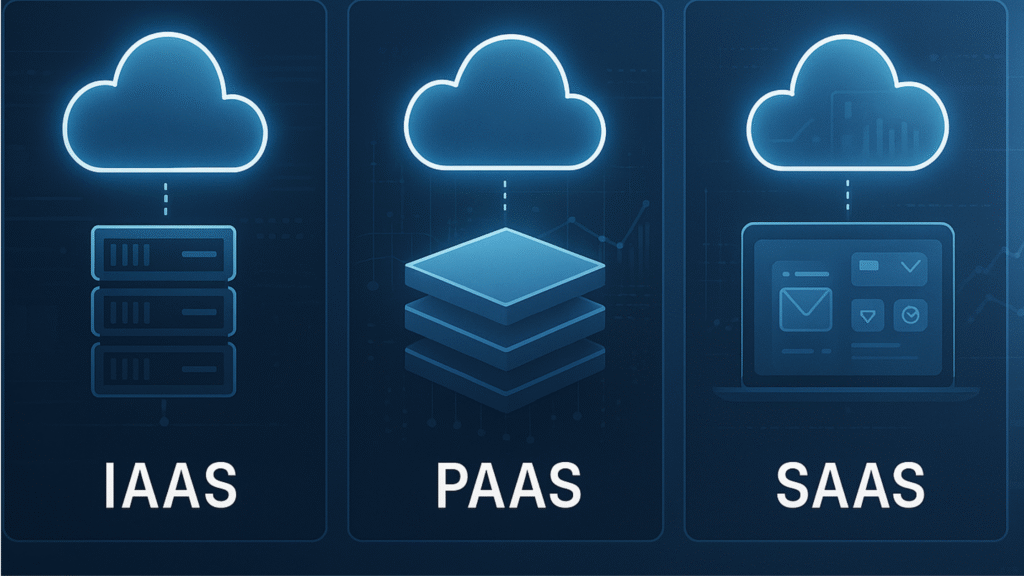
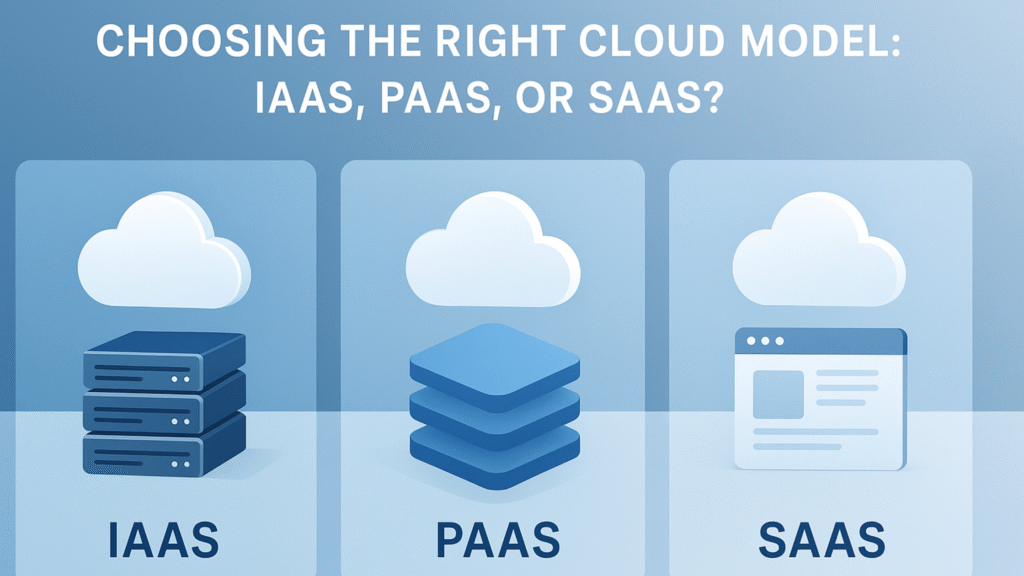
IaaS (Infrastructure as a Service) provides virtualized computing resources servers, storage, networking where you maintain complete control over the operating system, middleware, and applications. Think AWS EC2, Azure Virtual Machines, or Google Compute Engine. You’re essentially renting the foundational building blocks and constructing everything above them.
PaaS (Platform as a Service) abstracts infrastructure management entirely, providing a ready-to-deploy environment where developers focus solely on code. The provider handles OS updates, security patches, database management, and scaling. Heroku, Google App Engine, and Azure App Service exemplify this model.
SaaS (Software as a Service) delivers complete applications over the internet Salesforce, Microsoft 365, Slack where users simply log in and work. No installation, no infrastructure concerns, just immediate functionality.
The cloud reference model helps organizations map their specific requirements against these service types, but the reality is more nuanced. According to recent industry surveys, 74% of enterprises use multiple cloud service models simultaneously, creating complex hybrid environments that demand sophisticated orchestration.
The Hidden Costs of Traditional Cloud Approaches
Here’s where many technology leaders encounter unexpected challenges:
- IaaS demands substantial DevOps expertise: Managing bare-metal infrastructure requires dedicated teams skilled in networking, security configuration, and system administration often costing $150,000+ annually per engineer
- PaaS creates vendor lock-in: Proprietary APIs and service dependencies make migration expensive and risky, with replatforming projects averaging 18-24 months
- SaaS limits customization: Off-the-shelf solutions rarely align perfectly with unique business processes, forcing workarounds that reduce efficiency
The fundamental tension? You need IaaS flexibility for custom requirements and cost optimization, but you want PaaS speed for developer productivity. Traditional cloud computing models force you to choose one or the other.
Current Challenges: Why Manual DevOps Creates Operational Bottlenecks
The True Cost of Infrastructure Management Without Automation
Technology leaders consistently underestimate how manual DevOps processes erode competitive advantage. Consider these data-backed realities:
Time Sink Analysis: Development teams spend 35-40% of their time on infrastructure tasks rather than feature development. For a team of 10 engineers at $120,000 average salary, that’s $420,000 annually spent on undifferentiated heavy lifting.
Deployment Delays: Manual infrastructure provisioning takes 2-4 weeks on average. Every delay means slower time-to-market, allowing competitors to capture market share. In fast-moving sectors like fintech or e-commerce, this timing gap can be existential.
Configuration Drift: Without Infrastructure-as-Code discipline, environments diverge over time. One client reported spending 160 hours troubleshooting a production issue that stemmed from manual configuration differences between staging and production differences that automated systems would prevent entirely.
Security Vulnerabilities: Manual security controls create gaps. The 2024 Cloud Security Report found that 68% of organizations experienced cloud security incidents, with misconfiguration being the leading cause. When humans manually configure firewall rules, IAM policies, and encryption settings across dozens of services, mistakes are inevitable.
Scaling Challenges That Compound Over Time
As your infrastructure grows, manual processes become exponentially more problematic:
- Multi-cloud complexity: Managing consistent deployments across AWS, Azure, and GCP manually requires different tools, APIs, and mental models for each provider
- Compliance overhead: Maintaining SOC 2, HIPAA, or GDPR compliance across manually-configured infrastructure demands constant auditing and documentation
- Knowledge silos: When infrastructure knowledge lives in individual team members’ heads rather than code, you face massive risk if key people leave
- Inconsistent environments: Development, staging, and production drift apart, creating “works on my machine” problems that waste hours in debugging
Traditional cloud deployment models weren’t designed for this complexity. You need automation that works across providers while maintaining the control and cost-efficiency of IaaS.
Innovative Strategies: Automating DevOps for Maximum Velocity
The Infrastructure-as-Code Revolution
The most successful organizations have embraced a fundamental principle: treat infrastructure like software. This means version control, code review, automated testing, and continuous deployment but for your cloud resources rather than application code.
QuickInfra’s Approach: Instead of manually clicking through cloud provider consoles for hours, QuickInfra generates production-ready Terraform and Ansible scripts automatically. Here’s what this means in practice:
A mid-sized SaaS company needed to provision a complete Kubernetes cluster with monitoring, logging, CI/CD pipelines, and security controls across AWS and Azure. Traditional approach: 3 weeks of DevOps engineer time. With QuickInfra: 90 minutes from specification to running infrastructure.
The transformation isn’t just speed it’s consistency. Auto-generated Infrastructure-as-Code ensures:
- Reproducible environments: Spin up identical staging, testing, or DR environments with one command
- Audit trails: Every infrastructure change is tracked in version control with attribution
- Disaster recovery: Rebuild entire environments from code if regions fail
- Cost transparency: Infrastructure-as-Code makes it easy to estimate costs before provisioning
One-Click CI/CD: Eliminating Deployment Friction
Setting up robust CI/CD pipelines traditionally requires integrating multiple tools Jenkins, GitLab CI, GitHub Actions, ArgoCD each with their own configuration syntax and quirks. DevOps engineers spend weeks configuring build triggers, defining deployment stages, managing secrets, and troubleshooting integration issues.
QuickInfra’s one-click CI/CD setup transforms this multi-week project into a 15-minute configuration:
- Connect your Git repository
- Define your deployment environments (dev, staging, production)
- Specify security policies and approval workflows
- Click deploy
Behind the scenes, QuickInfra configures industry-standard tools according to best practices, handling secrets management, container registry integration, automated testing stages, and progressive rollout strategies. The result: developer productivity increases 4x because teams spend time building features, not configuring pipelines.
One retail client reduced their deployment cycle from 2 weeks to 6 hours, enabling them to ship features 23x more frequently. This velocity translated directly to competitive advantage—they could A/B test new features and respond to market changes faster than competitors still trapped in manual deployment processes.
Multi-Cloud Strategy Without Multi-Cloud Complexity
Many organizations pursue multi-cloud strategies for redundancy, cost optimization, or avoiding vendor lock-in. The problem? Each cloud model provider uses different APIs, terminology, and architectural patterns. Managing consistent infrastructure across AWS, Azure, GCP, and Oracle Cloud manually is a nightmare.
QuickInfra provides unified abstraction across cloud providers. Define your infrastructure requirements once compute capacity, storage needs, networking topology, security policies—and deploy to any supported cloud with the same workflow. The platform automatically translates your specifications into provider-specific configurations.
Real-world impact: A financial services company needed to deploy identical trading platforms in AWS (primary) and Azure (disaster recovery). Traditional approach would require maintaining separate Terraform codebases and custom scripts for each provider. QuickInfra’s unified approach reduced their multi-cloud management overhead by 65%, allowing their small DevOps team to manage both deployments without hiring additional staff.
Tools, Technologies, and ROI: The Business Case for Automation
Integration Without Disruption
Technology leaders rightfully worry about introducing new platforms into existing workflows. Will your team need to abandon current tools? Will migration take months?
QuickInfra integrates with your existing stack rather than replacing it:
- Version control: Works seamlessly with GitHub, GitLab, and Bitbucket
- Monitoring: Integrates with Datadog, New Relic, Prometheus, and Grafana
- Logging: Connects to ELK Stack, Splunk, and cloud-native logging services
- Security scanning: Incorporates Aqua Security, Snyk, and Trivy for automated vulnerability detection
- Issue tracking: Syncs with Jira, Linear, and Azure DevOps for deployment tracking
The cloud computing model you choose shouldn’t force wholesale tool replacement. QuickInfra enhances your existing investments while eliminating manual toil.
Quantifying the ROI: Beyond Soft Benefits
Let’s examine concrete financial impacts across three dimensions:
Cost Savings (65% reduction in DevOps expenses):
- Reduced headcount needs: Smaller teams manage larger infrastructure with automation
- Cloud spend optimization: Auto-generated Infrastructure-as-Code enables cost analysis and right-sizing
- Eliminated waste: Automatic environment cleanup prevents forgotten test instances from running indefinitely
Example calculation for a 50-person engineering organization:
- Current state: 3 full-time DevOps engineers at $150K each = $450K annually
- With QuickInfra: 1 DevOps engineer + $50K platform cost = $200K annually
- Savings: $250K per year
Velocity Gains (4x faster launches):
- Time-to-market for new features drops from weeks to days
- Competitive positioning improves as you ship faster than rivals
- Revenue impact: Getting features to customers 4x faster means capturing market opportunities competitors miss
Risk Reduction (100% secure & compliant from day one):
- Automated security controls eliminate human error
- Built-in compliance frameworks (SOC 2, HIPAA, PCI-DSS) reduce audit costs
- Disaster recovery automation ensures business continuity
One healthcare technology company avoided a potential $2.8M HIPAA fine because QuickInfra’s automated controls caught a misconfiguration that would have exposed patient data. The ROI on that single incident justified three years of platform investment.
Security and Compliance: Automated DevSecOps Controls
The traditional cloud deployment model treats security as a final step a last-minute audit before production deployment. This approach fails in modern continuous delivery environments where teams deploy dozens of times daily.
QuickInfra embeds security throughout the infrastructure lifecycle:
- Policy-as-Code: Define security requirements (encryption standards, network segmentation, IAM least-privilege) as code that’s automatically enforced
- Continuous compliance scanning: Every infrastructure change is automatically checked against your compliance frameworks
- Automated remediation: Non-compliant resources are flagged immediately with suggested fixes
- Audit logging: Comprehensive trails for every infrastructure change satisfy regulatory requirements
For regulated industries healthcare, finance, government this automated approach is transformative. A community bank reduced their compliance audit preparation time from 6 weeks to 3 days because all evidence was automatically collected and organized by QuickInfra.
Selecting Your Cloud Model: A Strategic Framework
Key Decision Criteria for Technology Leaders
When evaluating which cloud model aligns with your organization, consider these strategic questions:
Control vs. Convenience Trade-off:
- Do you need OS-level customization, specific kernel tuning, or custom networking configurations? → IaaS provides necessary control
- Are standard runtime environments (Node.js, Python, Java) sufficient? → PaaS simplifies management
- Do you simply need business functionality without any technical management? → SaaS is appropriate
Team Capabilities Assessment:
- Current DevOps expertise: Can your team manage Kubernetes, Terraform, networking, and security?
- Hiring market: Can you attract and retain specialized infrastructure engineers at competitive rates?
- Learning curve tolerance: How much training time can you afford for new tools and approaches?
Business Velocity Requirements:
- Time-to-market pressure: How quickly must you ship new features to remain competitive?
- Deployment frequency: Are you deploying weekly, daily, or multiple times daily?
- Innovation vs. maintenance ratio: What percentage of engineering time should focus on new capabilities vs. keeping systems running?
Cost Structure Preferences:
- Capital vs. operational expense: Do you prefer predictable monthly costs (PaaS/SaaS) or variable consumption-based pricing (IaaS)?
- Total cost of ownership: Are you calculating just infrastructure costs, or including personnel and operational overhead?
- Growth trajectory: How will costs scale as your usage increases 10x or 100x?
The Hybrid Approach: Best of All Cloud Models
Here’s the emerging reality: most sophisticated organizations don’t choose a single cloud reference model. They use:
- SaaS for commodity business functions (email, CRM, HR systems)
- PaaS for rapid prototyping and internal tools
- IaaS for core applications requiring customization and cost optimization
The challenge is managing this hybrid complexity. QuickInfra provides the orchestration layer that makes hybrid strategies practical:
- Consistent deployment workflows across service models
- Unified monitoring and logging regardless of underlying infrastructure
- Single security policy engine that works across IaaS, PaaS, and existing SaaS applications
- Cost management dashboard showing spend across all cloud providers and service types
Migration Pathways: Moving Between Cloud Models
Technology leaders frequently need to migrate between cloud computing models as business needs evolve:
Common migration scenarios:
- PaaS to IaaS: Outgrowing Heroku’s limitations and moving to self-managed Kubernetes for cost and control
- On-premises to IaaS: Lift-and-shift of legacy applications to cloud infrastructure
- Single-cloud to multi-cloud: Distributing workloads across providers for resilience and cost optimization
QuickInfra simplifies these complex migrations through automated replatforming:
- Assessment tools analyze current infrastructure and identify migration complexity
- Automated translation converts existing configurations to target cloud deployment model specifications
- Phased migration support enables gradual transitions with rollback capabilities
- Testing automation validates functionality at each migration phase
A logistics company migrated 47 applications from on-premises infrastructure to AWS in 8 weeks using QuickInfra’s automated approach a project their consultants initially estimated at 9 months with traditional methods. The automation eliminated the tedious manual work of recreating infrastructure configurations while ensuring consistency and security throughout.
Conclusion: Optimizing Your Cloud Strategy for Competitive Advantage
Selecting the right cloud model isn’t a one-time decision it’s an ongoing strategic process that evolves with your business. The key insight? You don’t need to sacrifice control for simplicity or accept slow deployment cycles to maintain security.
The most successful organizations embrace automation that delivers:
- IaaS flexibility and cost-efficiency
- PaaS developer productivity and simplicity
- Enterprise-grade security and compliance
- Multi-cloud portability without vendor lock-in
Key takeaways for technology leaders:
- Manual DevOps processes waste 35-40% of engineering capacity that could drive revenue
- Automation isn’t just about speed—it’s about consistency, security, and reducing operational risk
- The right cloud computing model combined with intelligent automation delivers 4x faster launches and 65% cost savings
- Multi-cloud strategies are only practical with unified orchestration and management layers
Your Implementation Roadmap
Phase 1 (Week 1-2): Assessment
- Audit current infrastructure management processes and identify manual bottlenecks
- Calculate total cost of ownership including personnel time spent on infrastructure tasks
- Define success metrics (deployment frequency, time-to-market, incident resolution time)
Phase 2 (Week 3-4): Pilot Implementation
- Select a non-critical application for QuickInfra pilot deployment
- Implement automated CI/CD pipeline and Infrastructure-as-Code for the pilot
- Measure improvements in deployment speed and developer productivity
Phase 3 (Month 2-3): Expansion
- Roll out automation to additional applications based on pilot learnings
- Train development teams on self-service infrastructure provisioning
- Implement automated security scanning and compliance controls
Phase 4 (Month 4+): Optimization
- Analyze cost savings from infrastructure right-sizing and automated management
- Extend multi-cloud capabilities for disaster recovery and cost optimization
- Continuously refine automation based on team feedback and business needs
Transform Your DevOps Operations Today
The competitive landscape doesn’t reward companies that spend months manually configuring infrastructure. Speed, security, and cost-efficiency determine who wins market share in digital-first industries.
QuickInfra eliminates the false choice between control and convenience. You get the power of IaaS across AWS, Azure, GCP, and Oracle Cloud with automated provisioning, security controls, and compliance built in from day one. Your teams deploy 4x faster while reducing DevOps costs by 65%.
Ready to see how automation transforms your infrastructure operations? Schedule a personalized demo with QuickInfra’s cloud architecture experts. We’ll analyze your current cloud deployment model, identify automation opportunities, and show you exactly how QuickInfra accelerates your development velocity while reducing operational overhead.
Don’t let manual DevOps processes slow your innovation. Join the technology leaders who have already transformed their infrastructure operations with intelligent automation. Your competitors are already moving faster ensure you’re not left behind.